






Sent To The City - Part 1
Set Apart by Convictions
Key Scripture: Jeremiah 29:7, Jeremiah 29:1-11, Jonah 4:11
Key thought: God seeks to advance his mission by sending us, his people, into the cities of the world. Our effectiveness in the mission of God is enhanced when we recognize the power of the city and the reality of our sentness.
Introduction:
For us to properly understand Jeremiah words in the passage that we have read its important that we understand the mind of the exiled community in Babylon. For many years Jeremiah as a prophet of the LORD had warned them to turn from their sins but they did not listen. As a result divine judgement struck they were conquered as a nation and became subject to the most degrading and humiliating treatment when they were exiled into Babylon.
Those that had been exiled to Babylon longed to go back. Psalm 137 captures their heart:
- Beside the rivers of Babylon, we sat and wept as we thought of Jerusalem.
This was their depth of love for Jerusalem.
It is in this context that Jeremiah writes a prophetic letter to the exiles from Jerusalem and tells them that their time in Babylon will not be short. In fact, it would be two generations or more70-years as a result. It is from this context that we get our key verse
- But seek the welfare of the city where I have sent you into exile, and pray to the LORD on its behalf, for in its welfare you will find your welfare.
From this we get the title of our sermon “sent to the city” because in this passage God emphasizes that their captivity is not a matter of chance, rather it is specifically a result of God “sending them” them to the city.
Two Parallels Between the Exiles of Babylon and the Christian Exiles of Today
1st Parallel: God’s People are A Sent People
At this point in Israel’s life this is a tragic story the exiles were preserved, but they went through some terrible things. Yet God wants them to understand that that they were “sent” they were not in Babylon by an accident of history it was God who sent them there-despite the circumstances. Although the circumstances are different the underlying principle is the same that God’s people “sent” into the World to advance his kingdom purposes
The concept of sending lies at the heart of what we understand when we talk about the concept of missions. The term Apostle signifies a “sent” one, sending is at the heart of what we think about when we read the great commission, Jesus himself said as the father has sent me so I am sending you. Therefore when we become part of the community of God, we become part of a missionary community, we have been “sent” into the world for his missionary purposes.
This sentness of the people of God I not a product of travel. The people of God are already sent event in their own local context. It is a function of their makeup and of their God who set them apart as his people. Hopefully this helps us understand what we mean when we talk about the International Christian Center being a missional church. We are a sent people set apart for his kingdom purposes
2nd Parallel: God’s People are Sent to the Cities
From our text we learn that the exiles were sent to the City of Babylon. The city of Babylon has some significant symbolic value. Some estimates say that Babylon at various stages, including at this stage where the exiles were taken from Judea, was the world largest city. In some sense it symbolizes the concept of the city. Babylon was a place of urban culture, advanced architecture and a place of political power. It is to this environment that the exiles are sent.
In a similar fashion God’s people today are sent or commissioned for his Kingdom purposes to the cities of the world. God sends his people to cities. This does not negate the fact that God sends people to rural areas, it simply serves to emphasize the reality that God has special concern for the cities of the earth.
These are two realities that ought to shape everything we do as the church, as the people of God. We are sent by God. We are here for His mission, and we have been sent to the cities. Unfortunately, too often the church in the last two centuries has neglected the city too often traditional Pentecostal movements in Africa such as the Assemblies of God have neglected the cities in their missionary planning and strategies.
Today I would like to call us as the people of God to put the city back where it belongs-at the heart of God’s agenda for humanity.
How are we to act in the light of our being sent to the City?
UNDERSTAND THE CITY
If we are invested in the City we have to take time to fully understand, to think through its hazards, its opportunities to bring it to the center of our envisioning of our planning of our dreaming as God’s missionary people.
When God looks at our cities what does he see? What does the future of the city hold for government, for businesses, church, for education, for justice, for families? We must invest ourselves in a continuous process of learning asking what it means to be the people of God in the City.
Understand that Cities are here to stay
“Evidence shows urbanization cannot be stopped whether by law, policy or development projects targeting the poor.” Mtafu Zeleza Manda Manda of the Malawi Institute of Physical Planners. Urbanization and urban growth are inevitable it cannot be reversed.
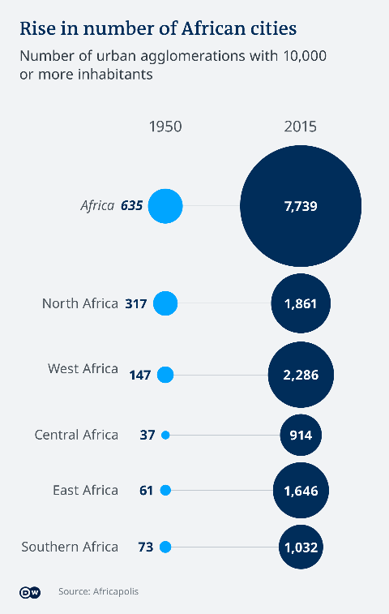
Understand that Cities are (also) an African Phenomenon
Understand that Malawi’s Cities Continue to Grow
Understand that Cities Direct the Nation
A New Vision for the City
We must challenge ourselves to move from seeing our cities as problems to seeing them as opportunities. When it comes to the mission of God, will the church respond to the challenge accordingly and view cities as arenas to advance the Kingdom of God? We must understand and develop new vision for the city.
WORK FOR THE CITY
Jeremiah says to the exiles that they are commanded to seek the welfare of the City. He also tells them to invest in the city and plant vineyards and acquire property. The Lord commands the exiles to be fully invested in the life and the economy of Babylon. They are to seek the welfare of the city. Therefore, if we are sent to the City, we must seek its welfare.
As the people of God, we must express our sentness by working for the welfare of the communities to whom God has sent us and where we live.
Our positive citizenship is expressed through the platform of our citizenship in community. Therefore, Christians ought to lead the way in economic investment, in positive living and in being a blessing to the community. We must use the platform of our citizenship of the city to be a blessing to the community.
There are many challenges to positive living in the city, we should be at the forefront of good neighbourliness expressed in our walking, in our driving, in our building etc etc.
Being a “sent people” means we should work for the welfare of the City
PRAY FOR THE CITY
We have already noted that cities are not utopias. There is only one city that is a utopia and that is the New Jerusalem descending from heaven! Because cities are intense concentrations of human populations, they are also intense concentrations of human problems. They are arenas of spiritual conflict.
Therefore, as we are sent to the city and as we seek to live out the gospel in the city and proclaim the gospel in the city we must also undergird that by prayer for the city. Jeremiah says to the exiles that they must seek the welfare of the City and also PRAY for the city. We must work and we must pray. In prayer we must take the city back from the forces of darkness that are trying to control the city. One reason that God has placed us in the city is so that we can pray for the city.
Conclusion
- DO SOMETHING THIS WEEK TO BE A BLESSING TO THIS CITY
- DEDICATE SOME TIME TO PRAY FOR THIS CITY
I have posted watchmen on your walls, Jerusalem; they will never be silent day or night. You who call on the LORD, give yourselves no rest, and give him no rest till he establishes Jerusalem and makes her the praise of the earth. Isaiah 62:6-7 Work for the City Pray for the City